
Last updated November 25, 2026
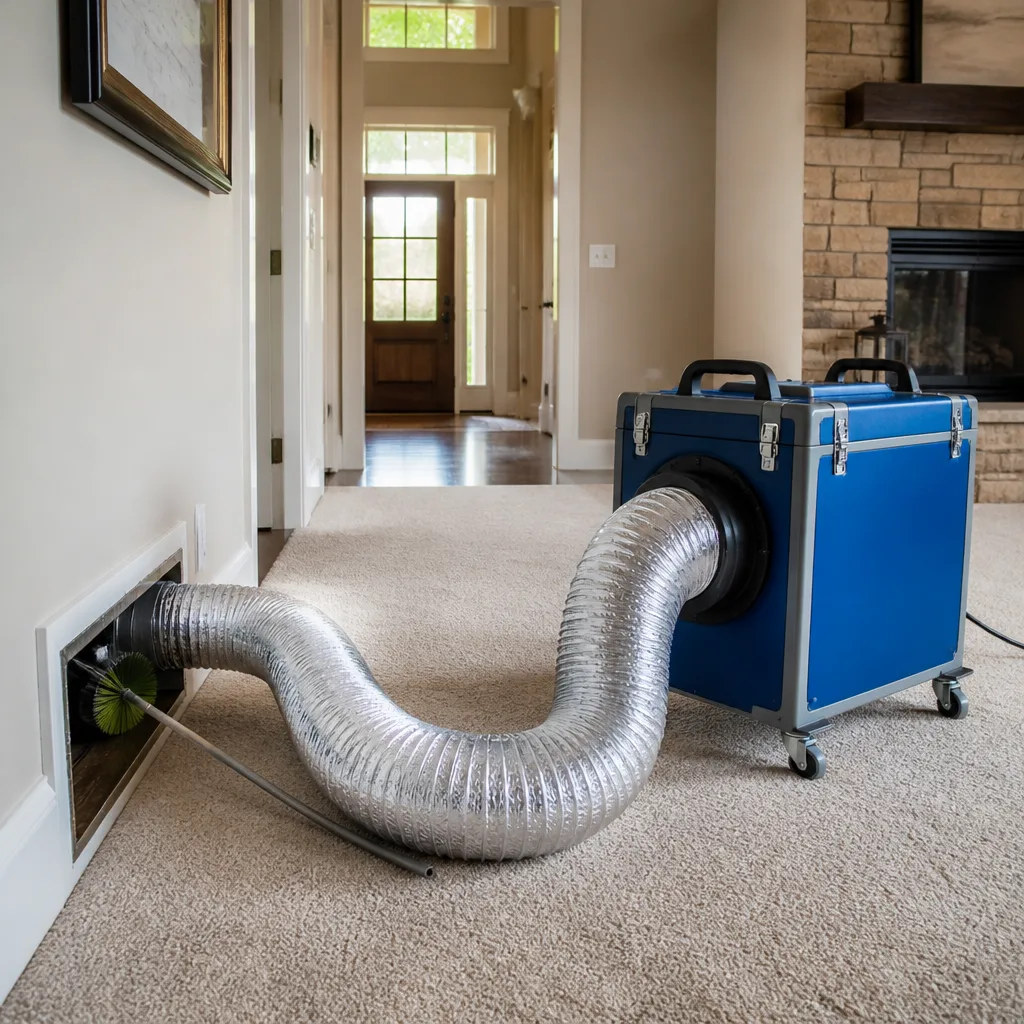 Whole-home duct cleaning
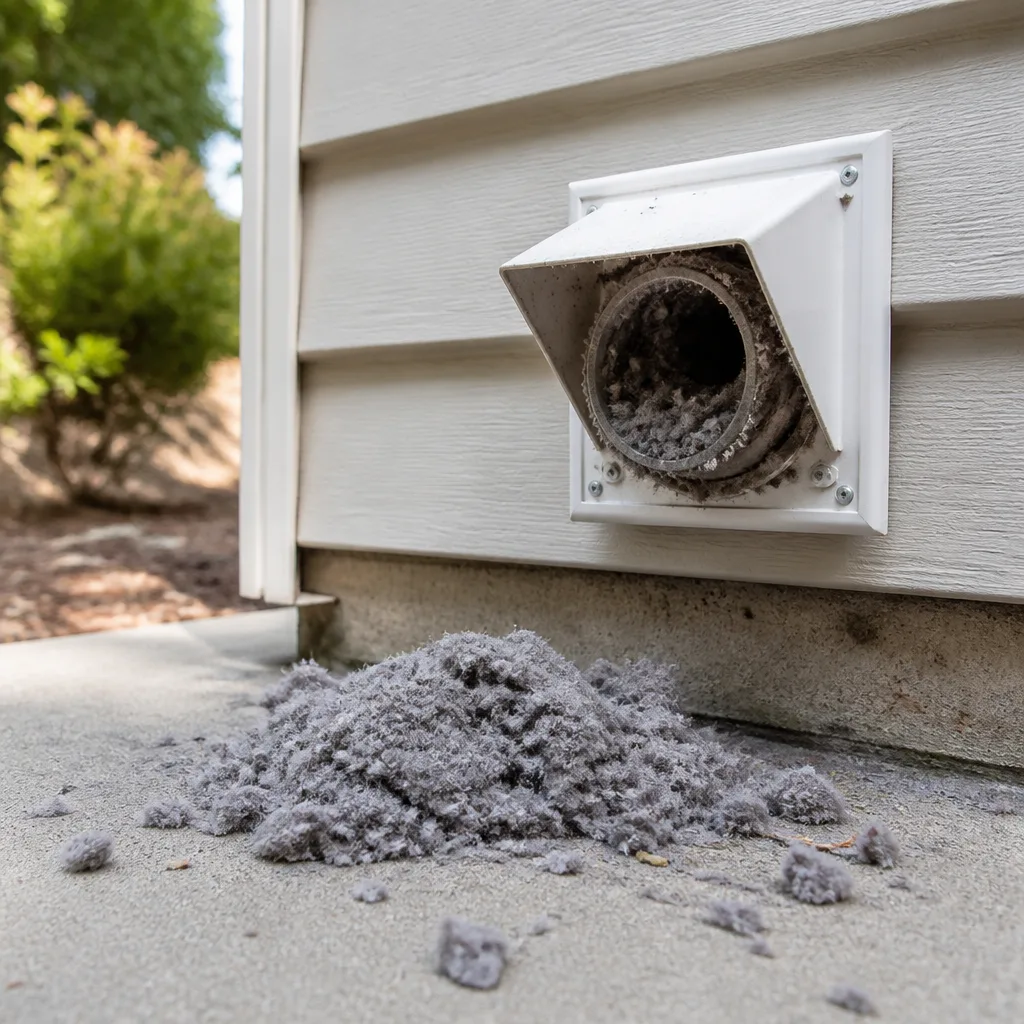 Dryer vent cleaning
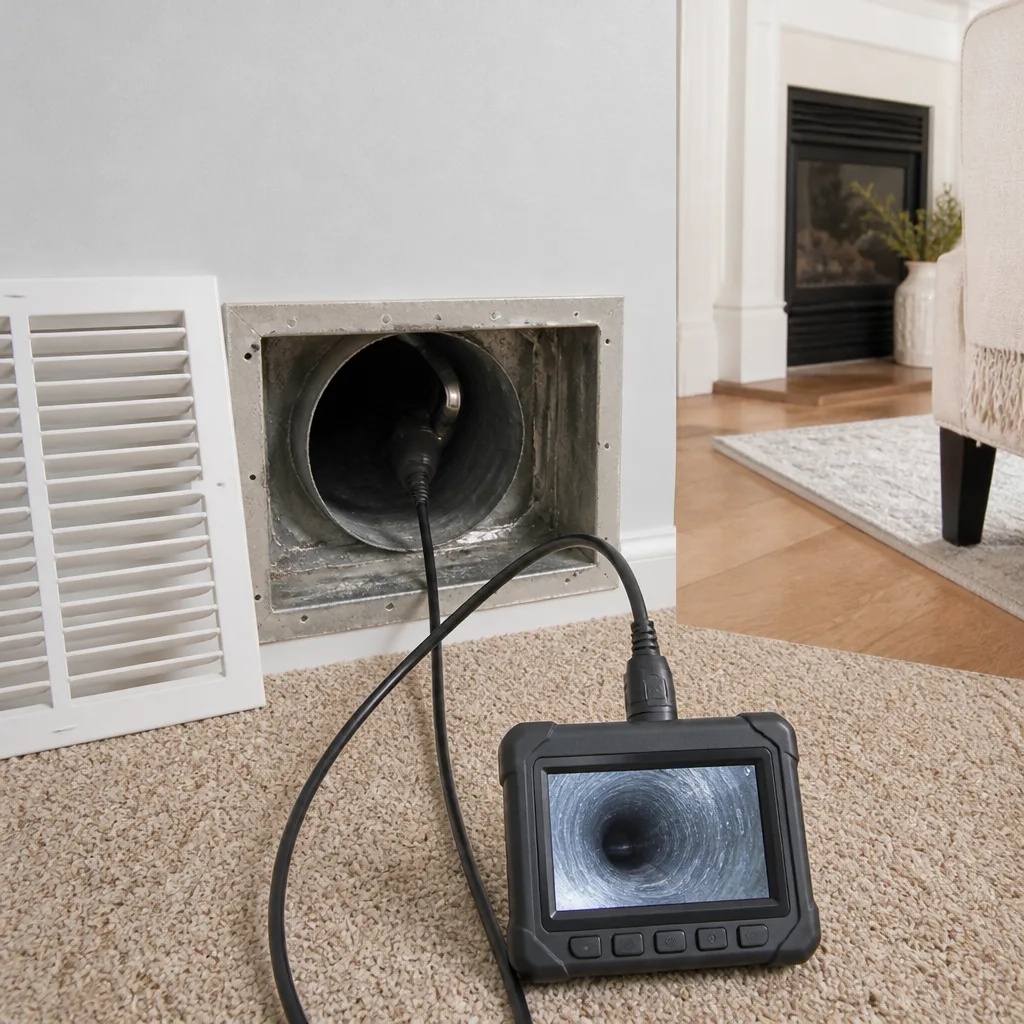 Camera inspection
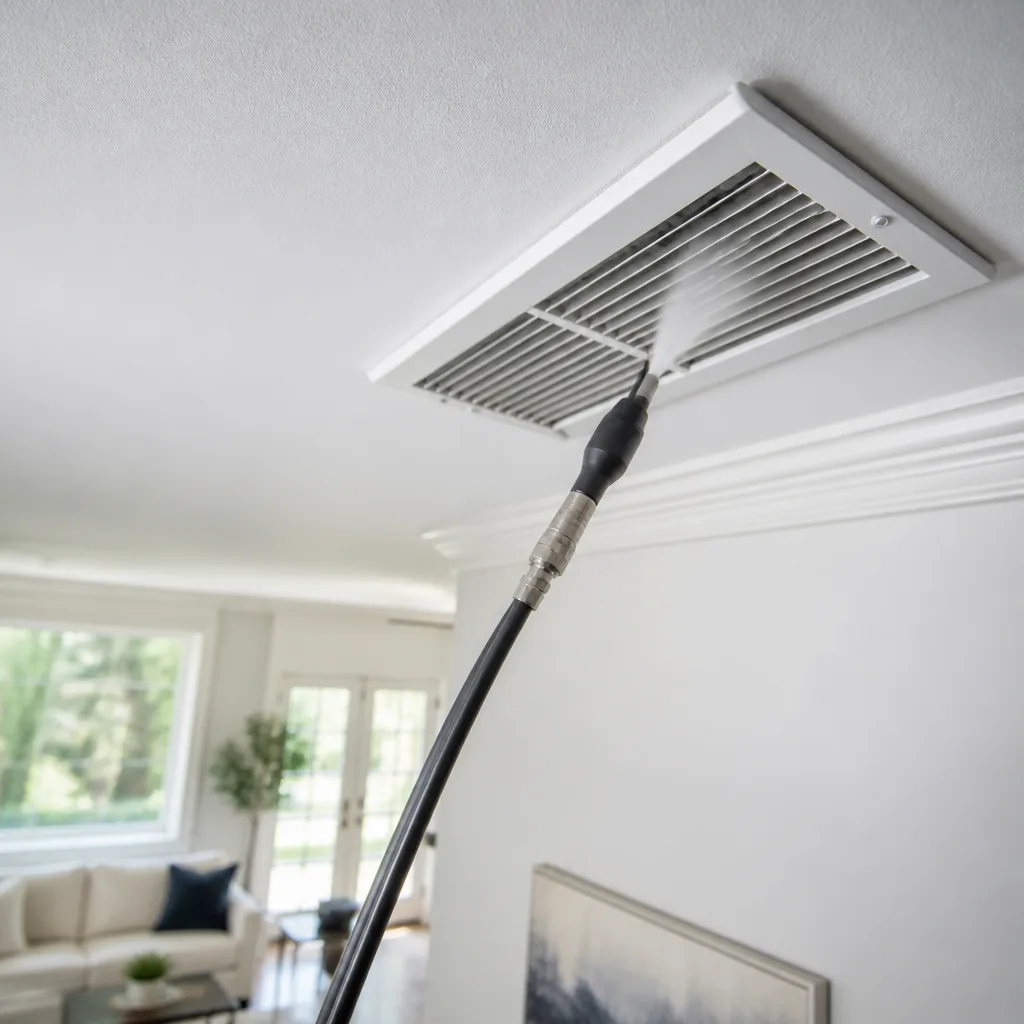 Sanitizing & deodorizing
Whole-system duct and dryer vent check with before-and-after photos - you see exactly what came out of your vents
That "$99 whole-house special" is a bait ad - the real number appears once they are in your hallway, or the "clean" is a shop-vac at the register. We photograph the inside of your ducts before and after instead.
Air Duct Cleaning Maintenance Checklist for Orem Homeowners
The single most common finding we make during duct inspections in Orem isn’t dirt. It’s a disconnected flex duct joint, tucked behind a wall or under insulation, that’s been blowing conditioned air into a crawl space or wall cavity for years without anyone noticing. The registers still feel fine. The system still runs. Nothing seems wrong until a room never quite heats the way it used to, or the smell in the basement gets worse each year. Dirt is the thing everyone thinks about. Loose joints, sagging duct runs, and filter bypass are the problems that do the real damage. This checklist walks you through the failure points we see repeatedly in Orem homes, zone by zone, so you can catch them before they turn into a bigger job.
Quick Answer
A good air duct maintenance checklist for an Orem home has five parts: inspect every supply register and return grille for dust patterns, check the air-handler cabinet and drain pan for moisture or gaps, verify filter fit and change interval for the season, look at accessible duct runs for sagging or disconnected joints, and log what you find. Run the full check twice a year – once in early spring before inversion season and wind pick up, and once in late fall before the house gets sealed for winter.
Styles & brands we work with
- Whole-home duct cleaning
- Dryer vent cleaning
- Camera inspection
- Sanitizing & deodorizing
Table of Contents
- Why a Duct Checklist Matters More in Orem Than Most Places
- Zone-by-Zone Inspection: Registers, Returns, and the Air Handler
- The Two Dust Colors That Tell You Something Specific in Utah Valley
- Filter Replacement Intervals for Orem’s Seasons
- How to Do a Basic Visual Inspection with a Flashlight and Your Phone
- Building a Maintenance Log That Holds Up at Resale
- Where the DIY Check Ends and air duct cleaning Begins
- Common Mistakes to Avoid
Why a Duct Checklist Matters More in Orem Than Most Places
Orem sits in Utah Valley, and the geography does specific things to a home’s duct system. Winter inversions trap cold, still air against the valley floor, and fine particulate settles on every horizontal surface, including the inside of duct runs that see slow airflow. Spring brings wind off the lake and mountain fronts that pushes iron-rich soil dust into crawl spaces and up through every crack in a framed floor. Homes built tight to hold heat in January also hold airborne moisture and wood smoke. Those are not the same conditions a duct system faces in a humid climate or a coastal town, and they change what you should be looking for.
We’ve pulled apart duct systems in Orem homes that were cleaned three years earlier and found compacted debris again – not because the cleaning failed, but because the source kept feeding it. A crawl space with no vapor barrier pumps moisture into return air. A return grille that’s grown undersized for a newer, larger air handler forces the blower to pull air from gaps in the cabinet instead of the house. Those are system problems, not cleaning problems, and the checklist you keep should catch them.
That’s the case for treating a maintenance checklist as a diagnostic tool rather than a reminder. A reminder says “clean ducts.” A diagnostic checklist says “check this joint, measure this filter, watch for this dust color, write it down.” That second version finds the loose flex connection before it costs you a heating season.
Zone-by-Zone Inspection: Registers, Returns, and the Air Handler
Walk your house with a notepad and work through five zones in order. Each one takes a few minutes, and doing them the same way every time means you’ll notice when something changes.
Zone 1: Supply registers
- Hold a tissue or a piece of thin paper over each supply grille. It should pull steadily toward the grille. Uneven or weak pull on one register usually points to a duct problem upstream, not a grille problem.
- Look at the grille face and the ceiling or wall around it. A dark ring or a streak of dust radiating outward is a sign of leakage at the boot, where the duct meets the register opening.
- Check for grime on the blades. Wiped-clean blades that get dirty within a month mean dust is being carried to that room and settling on the first hard surface it hits.
- Listen. A whistle at one register often means the rest of the system is choked or a damper is partly closed somewhere.
Zone 2: Return grilles
- Pull the grille if you can do it without tools. Look at the filter media behind it and the inside of the return boot.
- An oversized return grille relative to the air handler’s blower is a common source of filter bypass: air flows around the edges of the filter rather than through it. If you can see unfiltered gap at the edges of the filter frame, that’s bypass.
- Run your finger along the return’s interior wall. Grit that doesn’t wipe clean easily is compacted debris and usually means the run needs mechanical cleaning.
Zone 3: The air-handler cabinet
Shut off power at the breaker before you open the cabinet door. Once inside, check the blower wheel for an even coat of dust, look at the cabinet seams for gaps, and note any tape or mastic that’s cracking and peeling. A cabinet that leaks pulls attic or crawl space air directly into the airstream, which is one of the two or three biggest reasons indoor air quality tanks in Orem homes.
Zone 4: The drain pan and condensate line
Look for standing water, rust stains, or a slimy film. In summer, a slow-draining condensate line is the most common way a duct system ends up with mold growth at the evaporator coil. A little standing water now is a bigger job later.
Zone 5: Outdoor equipment connections
At the outdoor condenser, look for the refrigerant line insulation. Sun-degraded insulation cracks and peels, which loses efficiency but also tells you the equipment has been in place a while. At the roof or sidewall penetrations, check the sealant for cracking. Gaps there invite attic air and insects into the system.
The Two Dust Colors That Tell You Something Specific in Utah Valley
Dust color is a diagnostic signal, and in and around Orem two shades are worth learning to recognize.
White, chalky mineral dust near registers
If you see a white, powdery crust on furniture near a register, on the grille itself, or on the top of the air handler cabinet, look at your home’s humidifier first. Utah Valley water runs hard, and a humidifier plumbed to untreated tap water scales up and throws mineral dust into the airstream. It coats the furnace board, settles on the coil, and gathers at the bottom of duct runs. A humidifier pad that’s whitened and stiffened is a good confirmation. If you have a whole-home humidifier, look at the pad every fall before the heating season.
Reddish-brown dust at returns and floor registers
Orem’s soil has iron in it. When floor registers and return grilles take on a reddish-brown stain, that color usually means iron-rich soil dust is entering the return side from the crawl space or through gaps around the return boot in a wood floor. It’s a marker of intrusion, not just of age. Check the crawl space for a vapor barrier and look for open or unsealed penetration holes. If the stain appears mostly at floor-level returns, crawl space intrusion is worth putting at the top of your list.
Neither color is a cosmetic issue. White mineral dust points at humidifier or water-side problems; iron-stained dust points at the building envelope. Both tell you where to look before you call anyone.
Filter Replacement Intervals for Orem’s Seasons
A single “change it every three months” rule doesn’t fit Orem’s air. The load on a filter changes through the year here, and the smart approach is a calendar with two checkpoints and one adjust.
- Early spring (inversion season): Change the filter going into spring, then check it at the halfway point. Inversions trap fine particulate against the valley floor for days at a time, and every one of those days pulls that material into your return system. Homes near busy roads and homes on the bench with more wind exposure tend to load filters faster.
- Peak spring wind: Wind-driven soil dust is the heaviest single filter load of the year in Utah Valley. A filter that looks fine in February can be gray and matted by late April. Inspect it, and don’t be surprised if the interval is shorter than you’d guess for a few weeks.
- Summer: Cooling season runs the blower hard. Air conditioning doesn’t add much particulate, but a filter that’s been in place since spring has had its whole useful life. Change it before the cooling season starts in earnest.
- Fall and early winter: Sealed-up homes recirculate everything. Wood smoke from stoves and fireplaces becomes part of the indoor air, and a house that’s closed tight has no fresh-air exchange to clear it. Filter changes get more frequent, not less, once the windows close.
Match the filter to the frame. An undersized filter that rattles in its slot or leaves a visible gap pulls air around its edges, and a filter that bypasses its own media is close to a filter that isn’t there. Use the manufacturer’s recommended size, and note it in your log so you don’t have to measure again on the next change.
How to Do a Basic Visual Inspection with a Flashlight and Your Phone
You can inspect accessible duct runs without any training, and it’s worth doing before you call a professional. You’re not looking to fix anything. You’re looking for three symptoms: disconnection, sag, and moisture.
- Find the accessible runs. In most Orem homes, some or all of the duct system is exposed in the basement, crawl space, attic, or utility chase. Accessible runs are the ones you can see without removing panels or disassembling anything.
- Get light on them. A bright flashlight held at an angle across the duct shows more than one held straight on. Look for shadow lines where a joint has pulled apart. A flex duct that has separated at a collar often shows a ring of dust where air has been escaping for years.
- Take phone photos. A smartphone camera with the flash on gets into places you can’t get your head. Photograph every flex duct connection you can see, the air-handler platform, and every duct penetration through the floor or ceiling that’s exposed. Date the photos – you’ll want them later.
- Look for sag. Flex duct should be as straight and taut as practical. A run that dips more than a foot between supports is a sag, and a sag gathers condensation and dust. It also slows airflow to that register, which you’ll already have noticed from the tissue test.
- Check for moisture and staining. Rust at a joint, water stains on insulation, or gray-black streaks on the duct jacket mean moisture. Stop there and call a professional. Moisture in a duct system is a job for someone with proper containment and air-scrubbing equipment, not a shop-vac.
If you find a disconnected joint, don’t try to tape it back together with duct tape and call it done. A properly resealed joint is mastic and mesh, installed after the run has been rehung correctly. If a joint has pulled apart, that usually means the duct was under tension or undersupported, and reconnecting it without fixing the support just delays the next failure.
Building a Maintenance Log That Holds Up at Resale
The maintenance log is the part most homeowners skip, and it’s the part that pays off. A simple document with columns for date, service performed, filter size and type, and observations takes two minutes to update and does real work later.
- Date and service performed. Note every professional visit and what was done. If you hired a crew for HVAC cleaning, note what was cleaned and what equipment was used on site. That detail is worth its weight if a warranty claim comes up.
- Filter size, MERV rating, and change date. Note the size once and the changes every time. Manufacturers’ warranties on HVAC equipment frequently condition coverage on documented filter maintenance – a log that shows regular changes and correct filter specification is far stronger than a “we always changed it” statement.
- Observations. Write down what you saw: a new dust stain at a return, a whistling register, a room that heats slowly. A pattern of the same note three visits running is a clue.
- Photos. Attach the dated phone photos of accessible runs. Before-and-after photos of a professional cleaning belong here too.
- Receipts and reports. Many professional duct cleanings come with a written report noting what was found. Keep it. A future buyer’s home inspector will ask about the duct system, and a documented history answers the question before it’s asked.
- Dryer vent dates. Log dryer vent cleaning separately. Lint buildup is a fire concern, and documented maintenance is the kind of thing a home inspector likes to see.
If you’re in a home with a homeowner’s association, check whether the HOA requires documentation of dryer vent maintenance. Some do, and the log answers the question directly.
Where the DIY Check Ends and Professional Cleaning Begins
The checklist above will catch the majority of visible problems, but there’s a hard line between what a homeowner should do and what a trained crew with proper equipment should do. That line is drawn at anything requiring access to the full duct system, any moisture problem, and any repair.
Professional duct cleaning relies on mechanical agitation and negative-pressure extraction working together. The equipment matters. A Rotobrush mechanical brush system dislodges compacted debris from the duct walls so it can be captured, rather than just knocking loose dust into the airstream. A Nikro HEPA-rated vacuum extracts that loosened material on site. Abatement Technologies containment and air-scrubbing equipment keeps the work area sealed and filtered while that’s happening. That combination is the same standard applied in professional remediation environments, and it’s why a full-system cleaning doesn’t look like what a shop-vac can accomplish.
Repair and sealing is the piece most homeowners don’t think about until it comes up. If a crew finds a breach or a disconnected joint during a cleaning, the right answer is to fix it on the same visit, not to leave it and date a second appointment with a different contractor. Sealing leaks is part of the job, not a separate project. A well-sealed system delivers the airflow its equipment was designed to move. A leaking one wastes the same energy every month.
When it comes to the air after cleaning, the equipment matters too. Partnership with established air-quality brands like Honeywell and Aprilaire means filtration and humidification recommendations are based on products engineered to work in an HVAC system, not on unbranded parts. Guardsman sanitizing treatments apply the same principle to any post-cleaning air quality work. Clean air is a system problem, and treating it like one means addressing filtration, moisture, and duct integrity together rather than one at a time.
Common Mistakes to Avoid
- Taping a disconnected flex joint with duct tape and moving on. Duct tape loses adhesion on flex duct within a heating season, and the joint reopens. Mastic and mesh with proper support is the only reliable fix.
- Using the filter as the maintenance plan. Changing filters regularly is necessary, but it doesn’t clean the duct walls, doesn’t catch disconnected joints, and doesn’t address moisture. In Orem homes, filters catch airborne debris while the duct-work underneath can still be full of compacted dust.
- Ignoring a slight change in room comfort. A room that heats fine in October and pulls short in January is telling you something. Check the supply airflow and the return path to that zone before assuming it’s the furnace.
- Putting off the crawl space visit. Orem homes with vented crawl spaces tend to have moisture and iron-rich soil intrusion that finds its way into the return system. If you haven’t looked in the crawl space in two years, check the vapor barrier and the duct runs on your next inspection.
- Skipping the drain pan. A little standing water in the pan is easy to overlook and the most common early sign of a coil problem. Look every time you inspect.
- Calling a discount coupon-mailer crew without asking about equipment. A crew with a shop-vac and a wand can look busy and still redistribute dust through the house. Ask what equipment is coming into your home before anyone arrives.
- Not writing it down. A maintenance log that only exists in your head won’t help with a warranty claim or at resale. Paper or a phone note is fine – just keep it.
See the difference
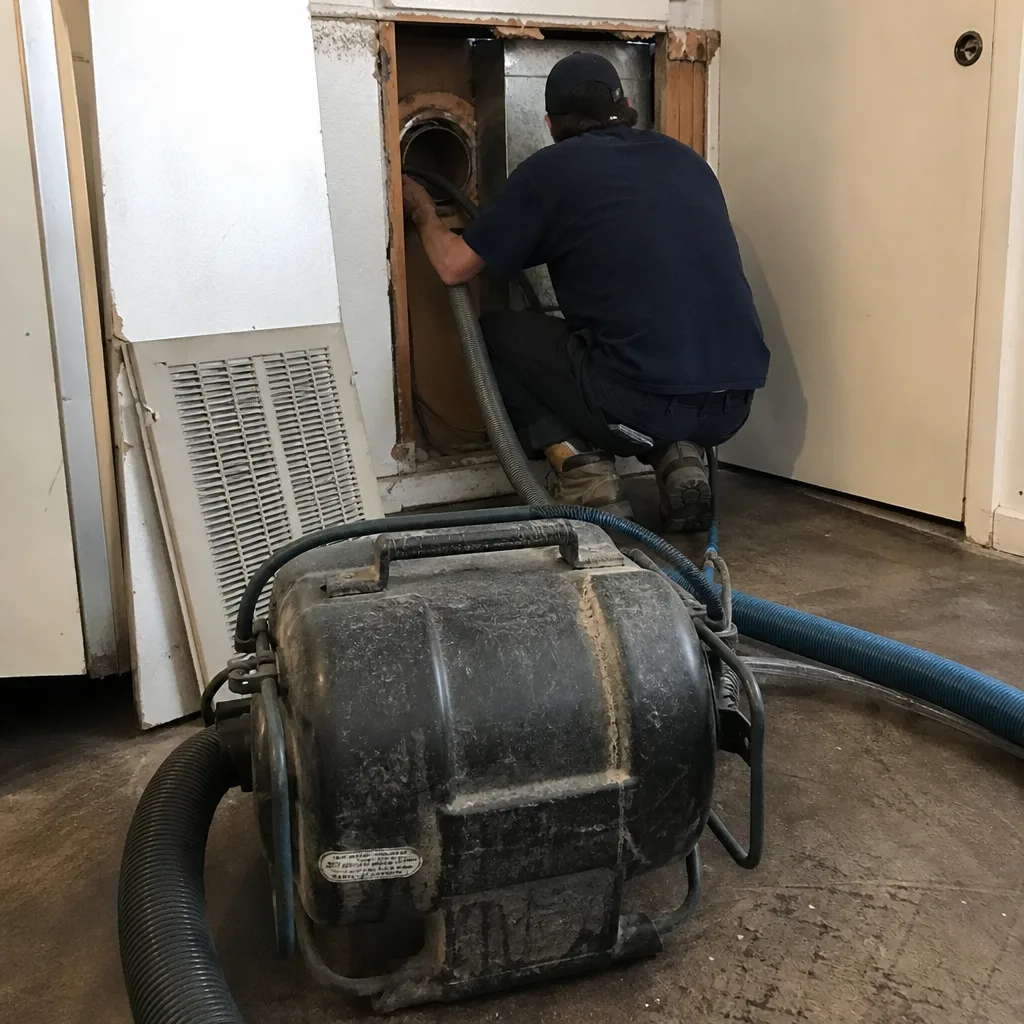 Before
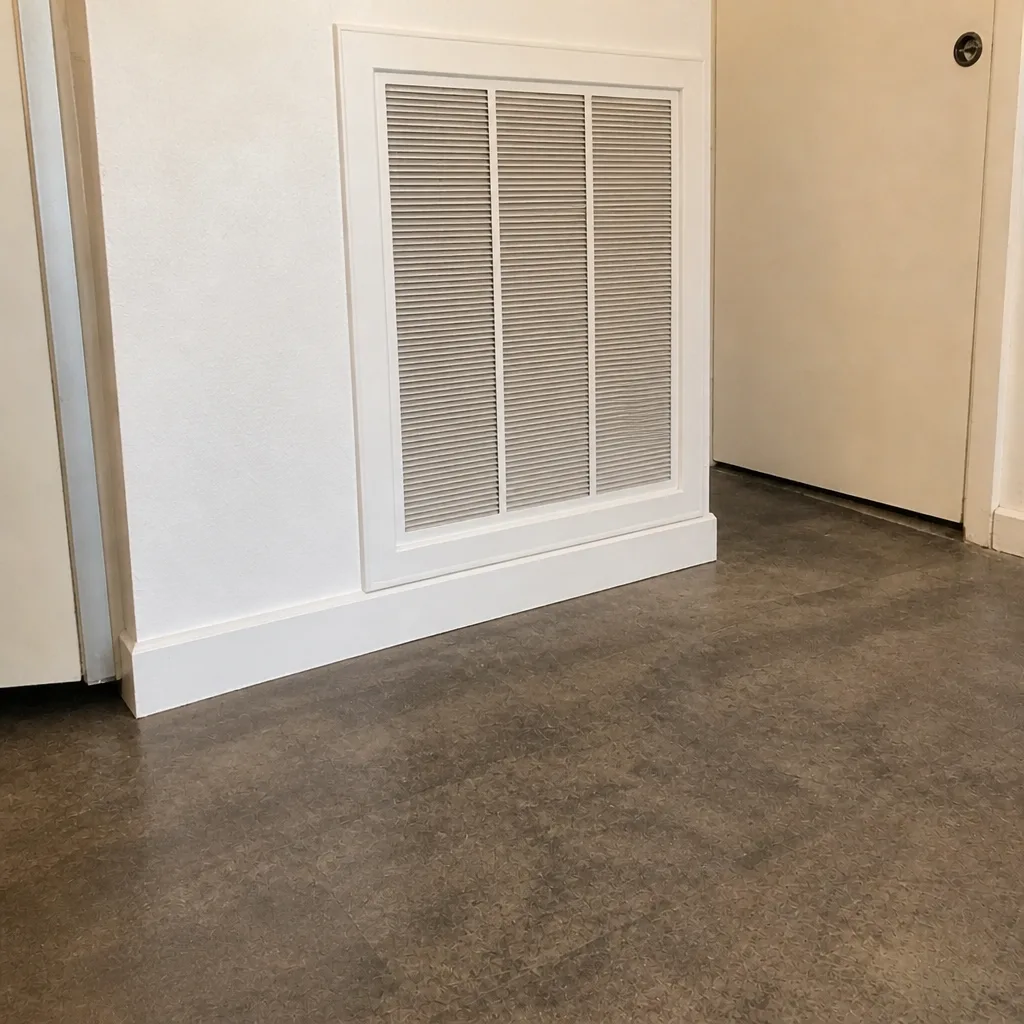 After
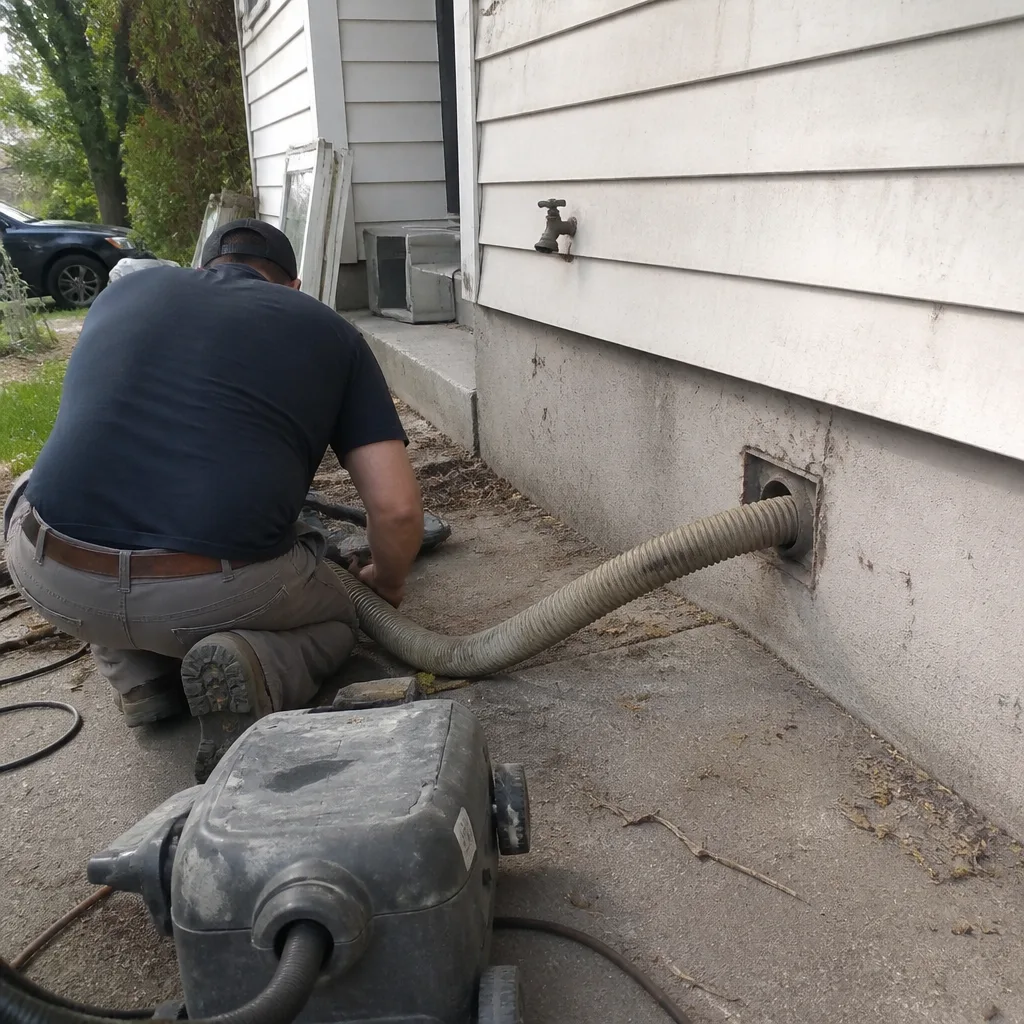 Before
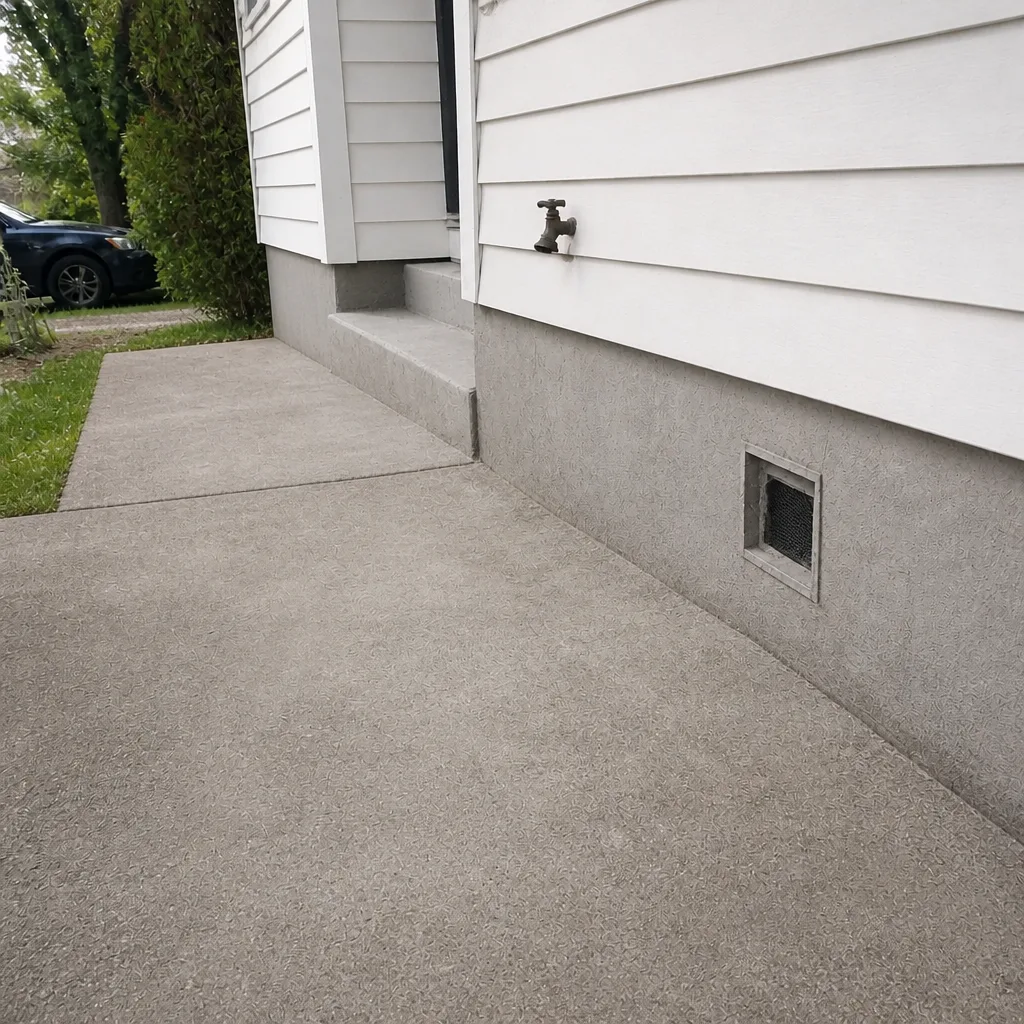 After
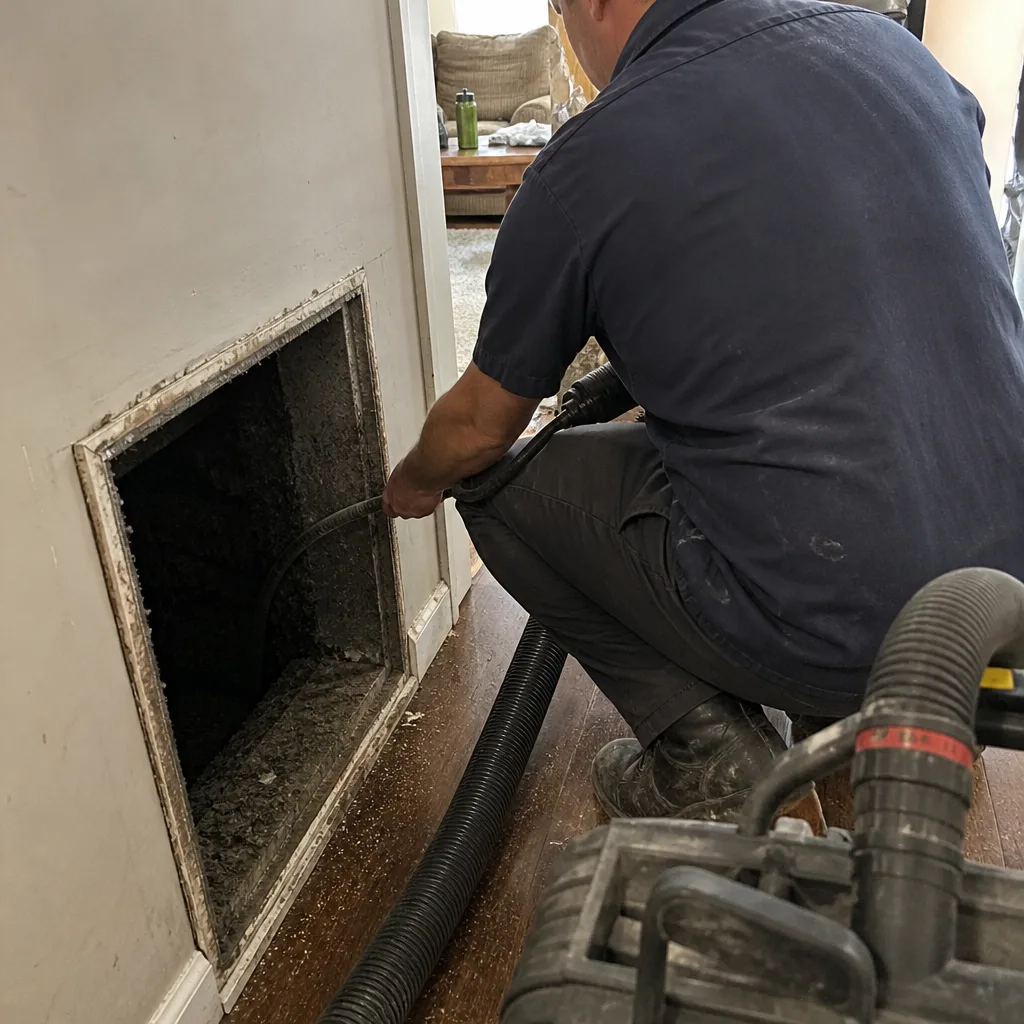 Before
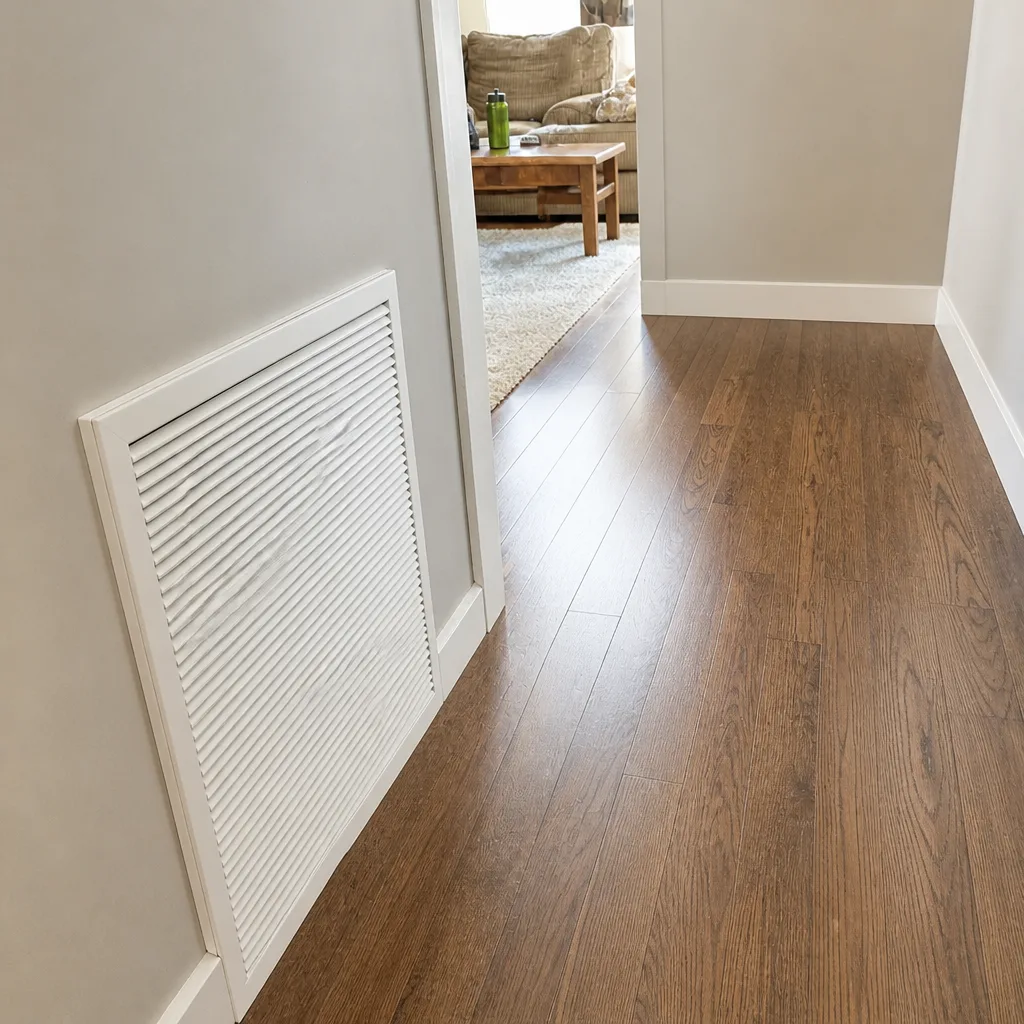 After
When to Call a Professional
Call a professional when the checklist turns up something beyond a filter change. The specific triggers: moisture or staining inside any duct run, a disconnected joint you can see, a return grille with visible filter bypass, a persistent musty odor when the system runs, or a noticeable drop in airflow to more than one room. Call also if it’s been several years since the duct system was cleaned, especially in an Orem home with pets, recent remodeling, or a crawl space. Orem Air Duct Cleaning Pros offers free estimates in Orem – call (866) 531-9116. We answer 24/7. Fast dispatch from 7am to 7pm, Sunday through Friday.
Frequently Asked Questions
Every three to five years for most Orem homes, and more often if you have pets, a recent remodel, or a vented crawl space. The right answer depends on the home’s envelope and the return system, not on a fixed calendar. Run the checklist above twice a year, and let what you find decide when to clean.
Most whole-system cleanings in Orem run a few hundred dollars and depend on system size, number of runs, and whether repair or sealing is needed. We give one flat price per system agreed before work starts – no per-vent pricing and no coupon-teaser figure that becomes a bigger invoice. Call (866) 531-9116 for an exact estimate – estimates are free.
Usually because the equipment is smaller. A shop-vac and a hand wand cost a fraction of professional-grade Rotobrush agitation and Nikro HEPA extraction. A cheaper quote that only reaches the registers and the first few feet behind them doesn’t clean the duct walls or catch disconnected joints. Ask what equipment is coming into your home before you compare prices.
Ask for before-and-after photos of your own ducts, and ask what the crew found. A professional cleaning produces documented evidence – photos of the runs before and after cleaning, and a note on any breach that was found and sealed. Anything less isn’t documentation. Call (866) 531-9116 for a free estimate that includes how a job is documented.
Three reliable indicators: a dark streak or dust ring around a register grille, a room that no longer heats or cools the way it used to, and a smell when the system first comes on. White mineral dust points to a humidifier scale problem and reddish-brown dust points to crawl space intrusion – either color is worth investigating. Call (866) 531-9116 to book an inspection – estimates are free.
Yes, for the visual part. Registers, returns, filters, the drain pan, and accessible duct runs are all things a homeowner can check with a flashlight and a phone. What you shouldn’t do yourself is the cleaning, sealing, or anything involving a moisture problem – that work requires proper containment and extraction, not a home vacuum.
The Bottom Line
A maintenance checklist earns its keep when it catches the loose joint, the sagging run, the bypassing filter, and the crawl space intrusion before any of them turns into a bigger job. The zones above give you a repeatable inspection, and the dust colors give you a way to read what you find. Run the check twice a year, keep the log current, and clean the full system on the schedule your home actually needs rather than the schedule a coupon assumes. If the walkthrough turns up something, call us – we’re specialists, and we’d rather look at it early than late.
Call (866) 531-9116 for a free estimate. We answer 24/7. Fast dispatch from 7am to 7pm, Sunday through Friday. Our technicians have up to 14 years of experience, and every job comes with one flat price per system agreed in writing before work starts, plus before-and-after photos of your own ducts.
Written by the team at Orem Air Duct Cleaning Pros.